
As the exclusive partner of Gentherm Medical range in Denmark and Sweden, we are proud to now be offering three modalities of patient temperature management - convective, conductive and resistive technologies.
Duomed Scandinavia, your trusted partner for innovative patient temperature management solutions.
Patient Temperature Management
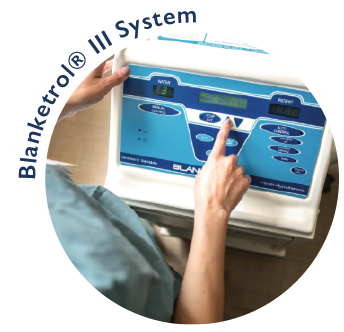
Patient temperature management plays a critical role in ensuring positive patient outcomes. Trusted by hospitals for over 60 years, the Blanketrol family of patient temperature management devices are the affordable, trusted solution to be used in nearly any situation where a caregiver needs to reduce, maintain or elevate a patient’s temperature.
Discover The Blanketrol III System, consisting of the Blanketrol III unit and a broad portfolio of blankets and kits, designed to precisely deliver targeted temperature management to patients.
Patient Warming
The core focus of Gentherm’s Patient Warming portfolio is to help maintain normothermia and reduce or eliminate unintended intraoperative hypothermia and the negative effects associated with it. Contributing factors such as the effects of anesthesia, exposure to a cold operating room and long surgery prep times can lead to perioperative hypothermia, emphasizing the critical need for active warming to prevent its occurrence.1,2,3
Gentherm offers multiple patient warming modalities, providing clinicians with options tailored to their preferences and specific situational requirements:
Convective Warming
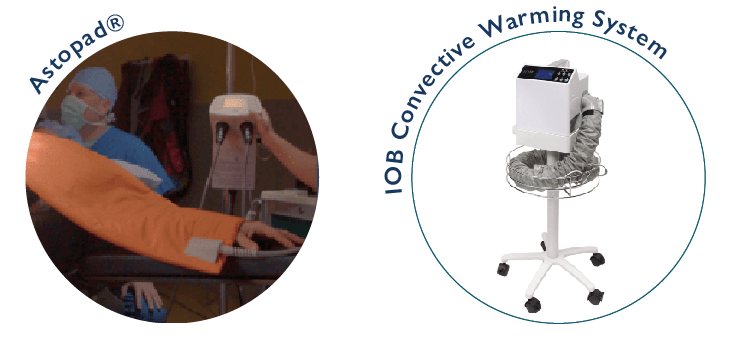
The IOB 505 Convective Warming Unit is engineered to enable clinicians to maintain normothermia in their patients by creating a warm microclimate around the patient. When compared to the leading brand, the IOB System provides effective, multi-factor air filtration when it recirculates air in the operating room.
Conductive Warming
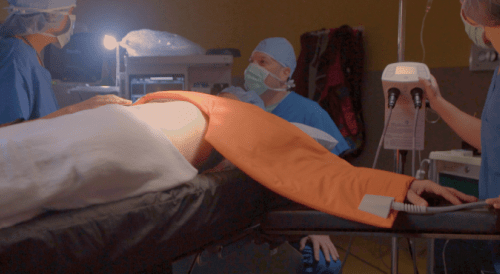
Astopad, a reusable patient warming system, uses resistive, air-flow-free active warming to help surgical patients maintain normothermic temperatures throughout the perioperative journey.
Blood & Fluid Temperature Control
Offering blood and fluid temperature control systems for infusions, transfusions and cardiovascular cooling/heating procedures for infant, pediatric or adult patient use.
Warm infusions and transfusions help protect your patient from hypothermia in the Operating Room and the Intensive Care Units. Astotherm Plus warms all infusions and transfusions by a dry flow-heating method for daily use.
Astoflo Plus Eco is a universal warming device for all infusion and blood products for operating rooms, intensive care units and all other medical departments.
The Astodia diaphanoscopic for Transillumination makes it easy to find blood vessels for reliable placement in pediatrics, especially premature and newborn babies. It also enables the identification of air or liquid-filled structures deep below the skin’s surface.
Achieve both your clinical and environmental goals
Sustainability is becoming a key factor in healthcare decision-making. Hospitals and healthcare systems are prioritizing environmentally responsible solutions that do not compromise patient care. Astopad® Resistive Patient Warming System and Astoflo® Plus Eco Blood and Fluid Warming System solutions are designed to help healthcare systems reduce waste, lower their carbon footprint and conserve resources.
If you have any questions about our product range or want to explore how our solutions can support your sustainability goals, please feel free to reach out using the button below or contact your representative directly.
1. Torossian A, Brauer A, Hocker J, Beln B. Wulf H, Horn EP. Preventing Inadvertent Perioperative Hypothermia. Dtsch Arztebl Int 2015; 112:166-72. DOI: 10.3238/arztebl.2015.0166
2. Diaz M, Becker DE. Thermoregulation: Physiological and Clinical Considerations during Sedation and General Anesthesia. Anesth Prog 57:25-33 2010
3. Guideline for Prevention of Unplanned Patient Hypothermia. AORN J. 2016; 103:305-310